
We'll Never Be Fragile Again by Thomas Moore (2025, Amphetamine Sulphate)
I Wish I Could Be What You Wanted


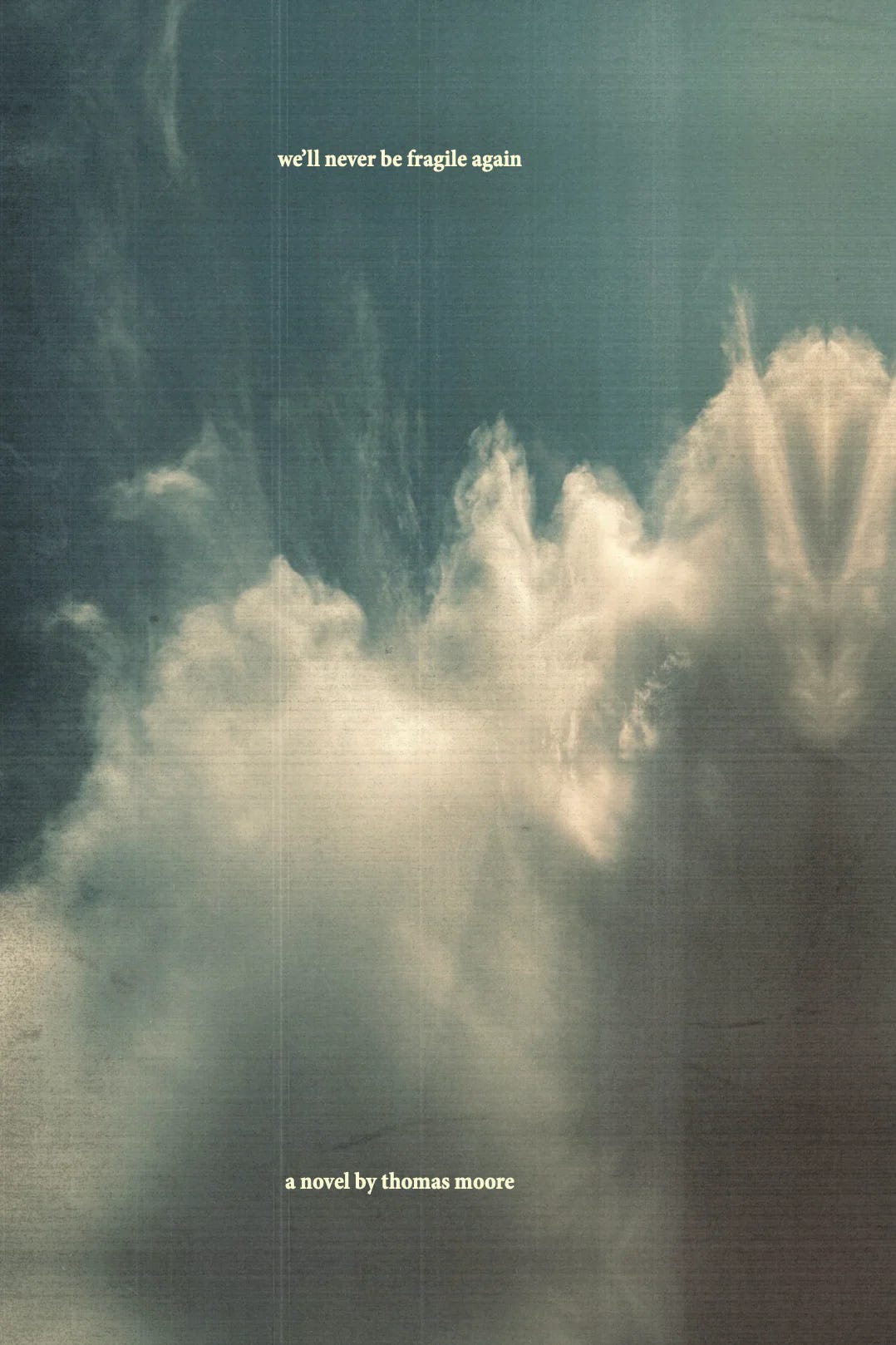
I’m overwhelmed by this book.
I first became aware of Thomas Moore through Dennis Cooper, who I discovered via Bret Easton Ellis, back when he still wrote blurbs, making my discovery of Thomas Moore feel like twenty years in the making, ever since I first read Less Than Zero in 2005.
If I was somehow cosmically destined to find him, I wasn’t quite ready for what this short novel, released by Amphetamine Sulphate, contained. I found myself, reeling, for lack of a better word, when I finished it for the first time, though I have returned to it multiple times since.
The title is impossibly poetic and beautiful, and it’s one of the books this year that I knew I would buy the second I saw it. Paired with the artistic cover, which brings to mind a Wolfgang Tillmans photograph, it looks and feels like a delicate thing, and in many ways it is. I should note here that the beautiful cover photography is actually by Michael Salerno, the owner of Kiddiepunk Press.
Written during a period of hardship, WNBFA sits firmly within the confessional autofiction genre, and though it contains moments of transgression, it is not an overly transgressive work overall.
The sex scenes serve the narrator’s story, existing to convey his sense of isolation, from his friends, from the world, and, most importantly, from himself.
“Confessional” almost feels too weak a word; the visceral self-analysis in this book hits like an absolute gut-punch. Like the best autofiction, it makes you stop and wonder if you should even be reading the words on the page. That may sound alarming, but for those invested in the new narrative/autofiction genre, this is precisely the effect you want to feel.
It demonstrates a psychopathic commitment to the craft, and Thomas Moore’s command of language, combined with his profound introspection, is nothing short of intoxicating.
For me, the novel carried two intertwined themes: the slow estrangement from friends that happens over time, which Thomas seems to both mourn and, in some way, blame himself for. It’s a compelling narrative angle, and I can’t recall ever reading a narrative that so fully captures the feeling we lazily call “growing apart.”
When you break down the act of “growing apart”, it’s actually a tragic circumstance. The people we grew up with, taking drugs, going to parties or clubs, those we swore we’d always remain friends with, slowly becoming less and less present, and in some cases, disappearing altogether.
The other theme is that of obsession. I think this is the best book about obsession I’ve read since Moby-Dick, and fortunately, I didn’t have to wade through any whale facts here. The object of Thomas’ distilled affection is never named, nor do we learn much about him, he simply exists, a psychic anchor throughout the novel, which is thereby haunted by a strange, pervasive silence.
This is a lonely book; even in moments when Thomas is among others, he conveys his utter separation from them. It is brutal, and, as I’ve said, I was not ready for such a focused, relentless work.
The book however is not without its moments of lightness. There are poetic musings in the short, almost haiku-esque chapters (Thomas even has a book of haiku poems on the previously mentioned Kiddiepunk press, that I plan to source soon, along with his other novels). And though I was shellshocked on my first read, on subsequent ones I was able to appreciate the stillness in some of the lighter prose, it was less of a rollercoaster.
A Dennis Cooper comparison would be lazy, but it’s easy to see why he endorses Thomas, who, in this book (aside from the opening), seems far less occupied with violence and emerges as an altogether different kind of character.
Like Cooper, however, he is undoubtedly a hugely important queer voice, shedding light on the quieter, lonelier, and, dare I say, spiritual aspects of the gay experience. You certainly won’t see him on the cover of Attitude magazine anytime soon, but the picture he paints is far more honest than what most would even dare discuss, let alone put into print.
US readers should buy We’ll Never Be Fragile Again from Amphetamine Sulphate, here.
Whereas UK and European readers should buy from Cargo Records with lower shipping costs, here.
 | A guest post by
|
Hell yeah, amphetamine sulphate